Mechanical Properties
Definitions
Brittle – The tendency of a material to fail suddenly by breaking without plastic deformation of the material before failure.
- Ductility – The ability of a material to be drawn into wire without fracture.
- Elasticity – The ability of a material to return back to its original size.
- Toughness – The ability of a material to absorb energy and plastically deform without fracturing.
- Hardness – The ability of a material to resist indentation, abrasion and scratching.
Mechanical testing of welded joints may be carried out for the following reasons:
- Welding procedure approval,
- Welder approval,
- Production quality approval.
A welding consumable manufacturer will carry out all-weld metal tests for each consumable type they manufacture. The parent material is normally subjected to extensive testing prior to its acceptance by a client and subsequent use on a contract. However, separate testing is still required for a welded joint, because it usually consists of three metallurgically different areas which interrelate: the weld, HAZ and parent material.
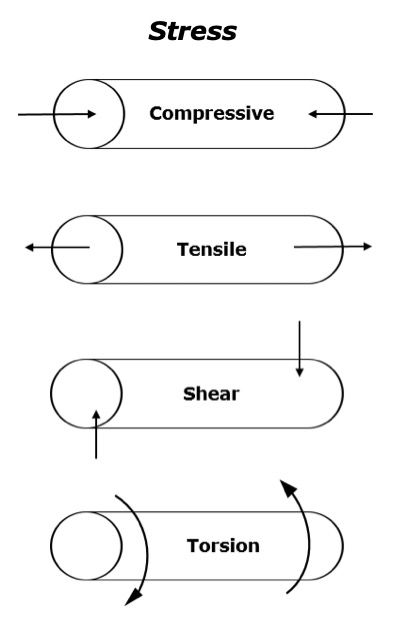
Mechanical testing is a destructive procedure and is not usually carried out on any component required for use, therefore, representative test samples produced under similar conditions to the in-service components are normally used and comparisons made. Methods used include welding procedure tests, random sampling of mass produced items and/or run-on – run-off plates.
The tests most frequently used to assess the properties of welded joints are:
- Tensile, - BS EN ISO 4136:2012, BS EN ISO 5178:2011
- Bend, - BS EN ISO 5173: 2010 & A1: 2011
- Nick-break
- Impact, - BS EN ISO 9016:2012
- Hardness, - BS EN ISO 9015-1:2011
- Macroscopic/microscopic, BS EN 1321:1997
- CTOD. – BS 7448-1 (1991) and BS EN ISO 15653:2010
Many standard specifications exist for mechanical testing. If the standard specification is exclusive to a particular mechanical test, it should be noted that the content will detail the equipment to use, how to carry out the test and report the test results, but the acceptance criteria would be specified elsewhere, e.g. in the application specification.